What Anxious First-Timers Should Know Before Flying to Thailand
Nervous about your first long-haul flight to Thailand? Real advice on layovers, surviving 20-plus hours in transit, and what those in-flight surprises actually mean.
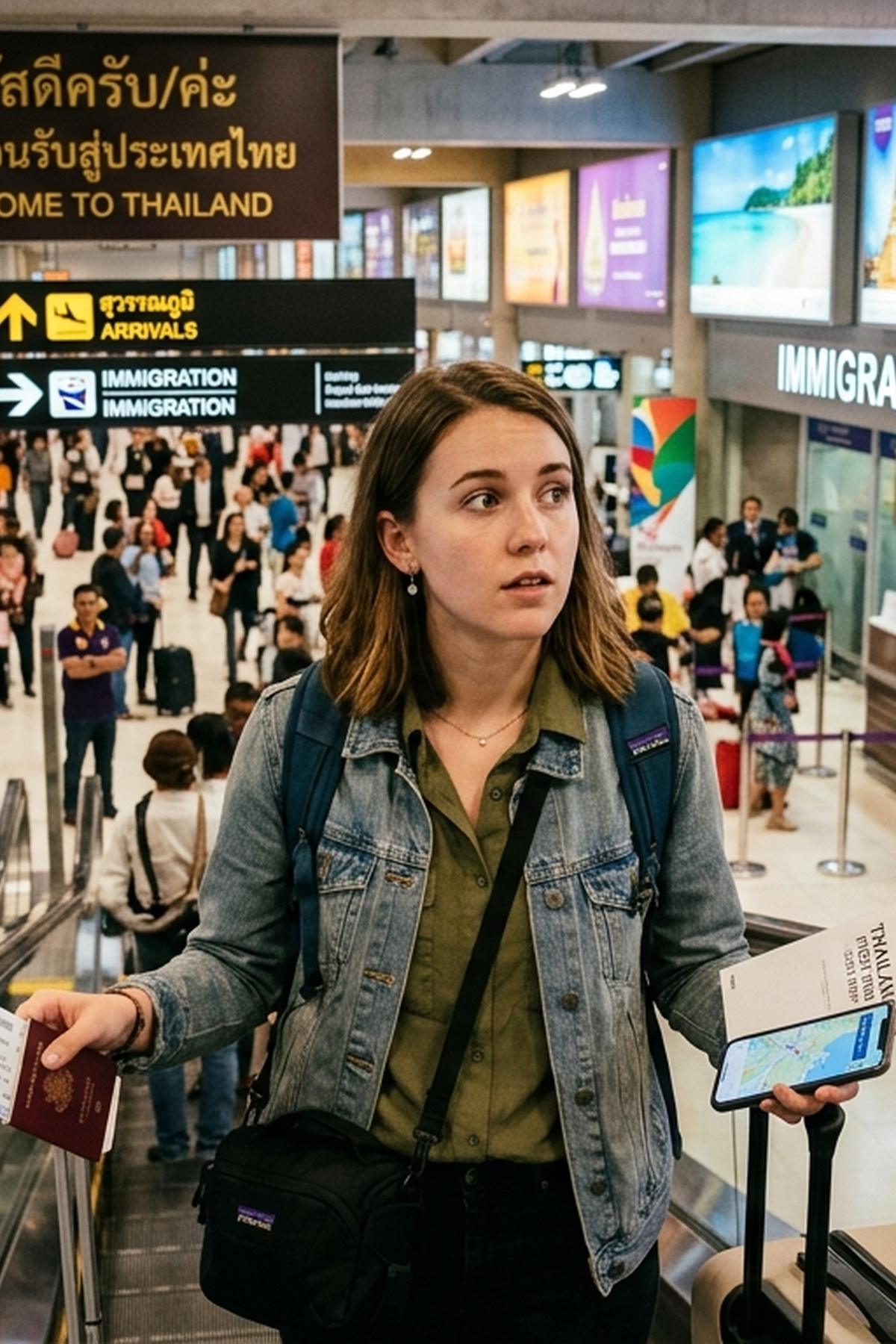
The number that stops most people before their first trip to Thailand is not the visa or the language barrier or the 13-hour time difference. It is the flight. Specifically, it is the moment you do the maths and realize you will be in the air, or inside an airport, for anywhere between 16 and 28 hours depending on where you are flying from. That number is real. And if you have never done long-haul before, the blank space where that experience should be starts filling itself in with worst-case scenarios.
This is not an article that will tell you to relax or promise it goes faster than you think. What you get here is exactly what you need before you board: the real shape of what this journey looks like, the decisions that genuinely make a difference, and an honest answer to what happens when the flight does not go exactly to plan.
Calm Before You Board
Flying to Thailand for the first time is genuinely long, and that is worth sitting with rather than sugarcoating. Most first-timers find it far more manageable than they feared, not because it is comfortable, but because knowing what to expect takes most of the fear out of it. Pick your layover city with care, pack for the seat and not just the destination, stay hydrated, and know that anything unusual the aircraft does mid-flight has a name, a procedure, and a trained crew behind it.
Why Your Layover City Is One of the Biggest Decisions You Will Make
Most flights from North America, Europe, and Australia do not go direct to Bangkok. You connect somewhere, and that somewhere matters more than most booking sites lead you to believe. A layover is not just a gap between planes. It is anywhere from two hours to twelve hours of your life, spent in a foreign airport at an unpredictable time of day, often exhausted and disoriented.
The good news is that some of the world's genuinely impressive airports sit directly on the most common routes to Thailand. Choosing your layover city deliberately, rather than defaulting to whatever comes up cheapest on a flight aggregator, can shift the entire texture of the journey.
A stop through Singapore's Changi Airport is a very different experience from one in a smaller regional hub at 3am. Changi has a swimming pool, a movie theater, sleep lounges, and free city tours for qualifying transit passengers. Dubai International operates around the clock and has good food at any hour, though the sheer scale of the place can feel overwhelming if you are tired. Doha's Hamad International is quieter and well-organized, which tends to work in favor of anxious travelers who want things to feel calm and predictable.
Kuala Lumpur is worth considering for budget-conscious travelers flying with AirAsia or Malaysia Airlines. The main terminal is clean and easy enough to move through. Abu Dhabi gets overlooked because of its proximity to Dubai, but the airport is far less crowded and Etihad's connections into Bangkok are reliable. Whatever city you connect through, a layover of less than 90 minutes on an international connection is a gamble, especially on a first trip. Give yourself room.
How Common Layover Hubs Compare for a Long-Haul First-Timer
| Layover Hub | Main Carriers | Airport Feel | Good Layover Length | Solo First-Timer Friendliness |
|---|---|---|---|---|
| Dubai (DXB) | Emirates | Busy 24-hour hub, large but well-signposted | 3 to 8 hours | High. English throughout, food at all hours. |
| Doha (DOH) | Qatar Airways | Modern, calm, easier to move around than DXB | 3 to 6 hours | Very high. Quieter pace suits anxious travelers. |
| Singapore (SIN) | Singapore Airlines, Scoot | World-class facilities, genuinely enjoyable layover | 4 to 12 hours | Exceptional. Pools, gardens, free transit tours. |
| Kuala Lumpur (KUL) | AirAsia, Malaysia Airlines | Clean and functional; KLIA2 can feel chaotic | 2 to 5 hours | Good. Budget-friendly, straightforward connections. |
| Abu Dhabi (AUH) | Etihad | Smaller and less crowded than Dubai | 3 to 6 hours | High. Relaxed atmosphere, solid amenities. |
The Reality of Sitting in a Plane for Over Fifteen Hours
Long-haul is uncomfortable. That is the honest version. You will probably sleep for a couple of hours and wake up feeling like you missed something important. Your lower back will notice the seat long before you consciously register it. The person next to you may have very different ideas about the shared armrest situation.
An aisle seat on a flight this long is not just a preference. It is a genuine quality-of-life decision. Being able to stand up and walk to the bathroom without disturbing two people is the kind of small freedom that matters enormously at hour nine. If you already carry anxiety about flying, being able to stand whenever you need to, rather than feeling hemmed in, is worth paying a small seat selection fee to secure before you board.
Pack a separate personal bag for the seat pocket rather than relying on the overhead bin. Put your lip balm, charger cable, headphones, a snack, and any medication in there before the plane even taxis. You will thank yourself at hour seven when you are too drained to stand up and dig through your main luggage just to find your earphones.
Cabin air at altitude is dry, and most first-timers genuinely underestimate how dehydrated a long flight makes them. Drink water consistently throughout, even if it means more bathroom trips. Your skin, any headache at landing, and your energy for that first Bangkok afternoon will all reflect whether you did this or not. Alcohol during a long-haul flight amplifies anxiety and disrupts whatever broken sleep you manage to get. Being honest with yourself about whether a drink is genuinely calming or just something to do with your hands will serve you far better than habit.
Getting up to move around every hour or two is not optional comfort advice. Staying seated for extended periods on long flights raises the risk of deep vein thrombosis, where blood clots can form in the legs due to poor circulation. A short walk to the rear galley and back every couple of hours is enough to make a real difference. Compression socks are a reasonable call if your legs tend to swell on shorter flights.
When the Plane Does Something That Surprises You
This section exists because of a specific kind of anxiety that long-haul first-timers rarely talk about openly: the fear of being in the air for a very long time and having something happen that you do not understand and cannot control.
Planes do things mid-flight that can feel alarming if you have no frame of reference for them. The engines might change pitch during a descent. You might feel a significant banking turn when you assumed you were heading in a straight line. The flight path on the seatback screen might show a route that looks nothing like the direct line you imagined when you booked. And in the most startling scenario for a nervous flier, the aircraft might descend toward the destination airport, appear to be lining up with the runway, and then suddenly climb steeply back into the air.
That last event is called a go-around. It is one of the most disorienting things that can happen on a flight for a passenger who has never experienced it before. It is also one of the most routine procedures in commercial aviation. A go-around happens when the landing cannot be completed safely at that precise moment, typically because another aircraft is still on the runway, a sudden crosswind has moved outside acceptable limits, or the approach simply does not meet the required parameters. The pilots abort the approach, climb to a safe altitude, and come around for another attempt. The crew knows it is coming before it starts. The aircraft is designed for it. It is not a malfunction. It is the system working exactly as it should.
Route changes and extended holding patterns fall into exactly the same category. If weather over Bangkok makes it unsafe to land on schedule, the aircraft holds in a slow circuit at altitude until conditions improve. If fuel becomes a concern during a long hold, the crew diverts to the nearest suitable airport to refuel before continuing the journey. None of this is a crisis. If you want to understand what is actually happening during events like these, rather than filling the silence with your worst assumptions, reading about flight diversions explained before you travel means you are working from facts the moment anything unexpected happens.
Flight crews are trained to communicate clearly during unusual events, but they are also flying the aircraft at the same time. An immediate intercom explanation is not always possible. If the cabin crew look calm, treat that as meaningful information. They would not be if something were genuinely wrong.
What to Expect When You Finally Land in Bangkok
Suvarnabhumi Airport is large, busy, and easier to move through than its size suggests. Arrivals are on the second floor, immigration is signposted consistently in English, and the queues at passport control can move quickly or very slowly depending entirely on what time you land and which flights have just come in from the Middle East.
Most Western passport holders qualify for a visa exemption on arrival, meaning they join the standard immigration line rather than the separate visa-on-arrival counter, which can run very long. Whether you need a visa depends on your nationality and the length of your planned stay. This is worth confirming with official Thai immigration guidance before you fly, not from a travel forum post that may be two years out of date.
The Airport Rail Link train connects directly to central Bangkok and takes around 30 minutes to Phaya Thai station. It is affordable, air-conditioned, and requires no negotiation with anyone about price or route. For a solo first-timer arriving late at night with no sleep and a loaded backpack, this is almost always the right call over a taxi, regardless of what anyone suggests about convenience.
You will be tired when you land. You will probably have no idea what day it is. This is completely normal and expected. The only goal for arrival day is to get to your accommodation without making decisions you will regret. Find the hotel, drink something, and sleep. Bangkok will be there in the morning, and it will still be worth it.
The Thing About This Flight That Nobody Quite Prepares You for
Here is what surprises most first-timers once they have actually done it: the flight itself is rarely the hardest part. The hardest part is usually the stretch between booking and boarding, the weeks or days when anxiety builds in the absence of any real experience to anchor it. Your brain tries to imagine what 20-plus hours in the air feels like, and without a memory to reference, it tends to fill that gap with something far worse than the reality.
Here is what it actually feels like. The aircraft taxis. You take off. The first few hours feel like a long domestic flight, just with better films and a tray of food that arrives at an odd hour. You get sleepy. You sleep badly. You wake up somewhere over central Asia or the Indian Ocean. You check the flight map, realize you still have six hours left, and feel briefly defeated. You eat again. You watch something else. Eventually the seat belt sign comes back on for the descent.
That is most of it. The overwhelming majority of long-haul flights to Bangkok are uneventful in the truest sense of the word. The anxious anticipation beforehand is usually the most intense part of the whole experience, not the flight itself.
What changes after that first trip is that you have the memory. You know what it costs your body, how your sleep breaks up, and what it feels like to finally land on the other side. That knowledge converts a flight that once felt impossible into something that is just inconvenient. And inconvenient you can absolutely work with.
Read next
-
 Staying Connected in Thailand and Southeast Asia on Your First Solo Trip
Ease first solo trip nerves in Thailand and Southeast Asia with offline maps, SIM and eSIM advice, arrival plans, and reliable backup access.
Staying Connected in Thailand and Southeast Asia on Your First Solo Trip
Ease first solo trip nerves in Thailand and Southeast Asia with offline maps, SIM and eSIM advice, arrival plans, and reliable backup access.
-
 Planning a Long Stay in Thailand When You've Never Been to Asia Before
First long stay in Thailand? Learn how to plan accommodation, transport, visas, and cultural prep that short-trip guides skip entirely.
Planning a Long Stay in Thailand When You've Never Been to Asia Before
First long stay in Thailand? Learn how to plan accommodation, transport, visas, and cultural prep that short-trip guides skip entirely.