What I Found Spending a Week in Khon Kaen and the Isaan Countryside
Isaan is the vast northeast region most travellers skip. Starting in Khon Kaen, I found a Thailand of silk weavers, fiery salads, and genuine welcome.
- Flag
-

- ISO code
- TH
- Currency
- THB
What I Found Spending a Week in Khon Kaen and the Isaan Countryside
You have read that Isaan is the empty quarter, the hot flat bit of Thailand that tourists skip on the way to somewhere else. That is wrong. What it actually is: a region that does not perform for you. No one here is selling you an experience. The morning market is not a show. The silk weaver does not stop working for your photo. That is exactly why you should go. This page uses Khon Kaen as your entry point, one night on an overnight train from Bangkok, to show you what Isaan actually looks like when you stop assuming it needs to be interesting for tourists. It is not empty. It is full of things that have nothing to do with you. That is the whole point.
Arriving by Night Train is the Right Move
Book the Sleeper
Board Special Express No. 25 at Krung Thep Aphiwat Central Terminal at 20:25. You wake up in Khon Kaen at 04:58. That is eight and a half hours you did not waste on a highway. Book a lower berth in second class air conditioned. The State Railway of Thailand sets these fares annually, so verify the current price before booking. You arrive before dawn, which is the point. The city is waking up. You walk out of the station into air that smells like grilled pork and charcoal.
A bus from Bangkok costs 380 to 650 baht depending on VIP or standard class, varying by operator. The train is better because you sleep, because you do not sit upright for eight hours, and because the arrival time forces you into the morning market before the tour groups (there are barely any) show up.
The Morning Market is Not a Photo Op
Find the Real Breakfast
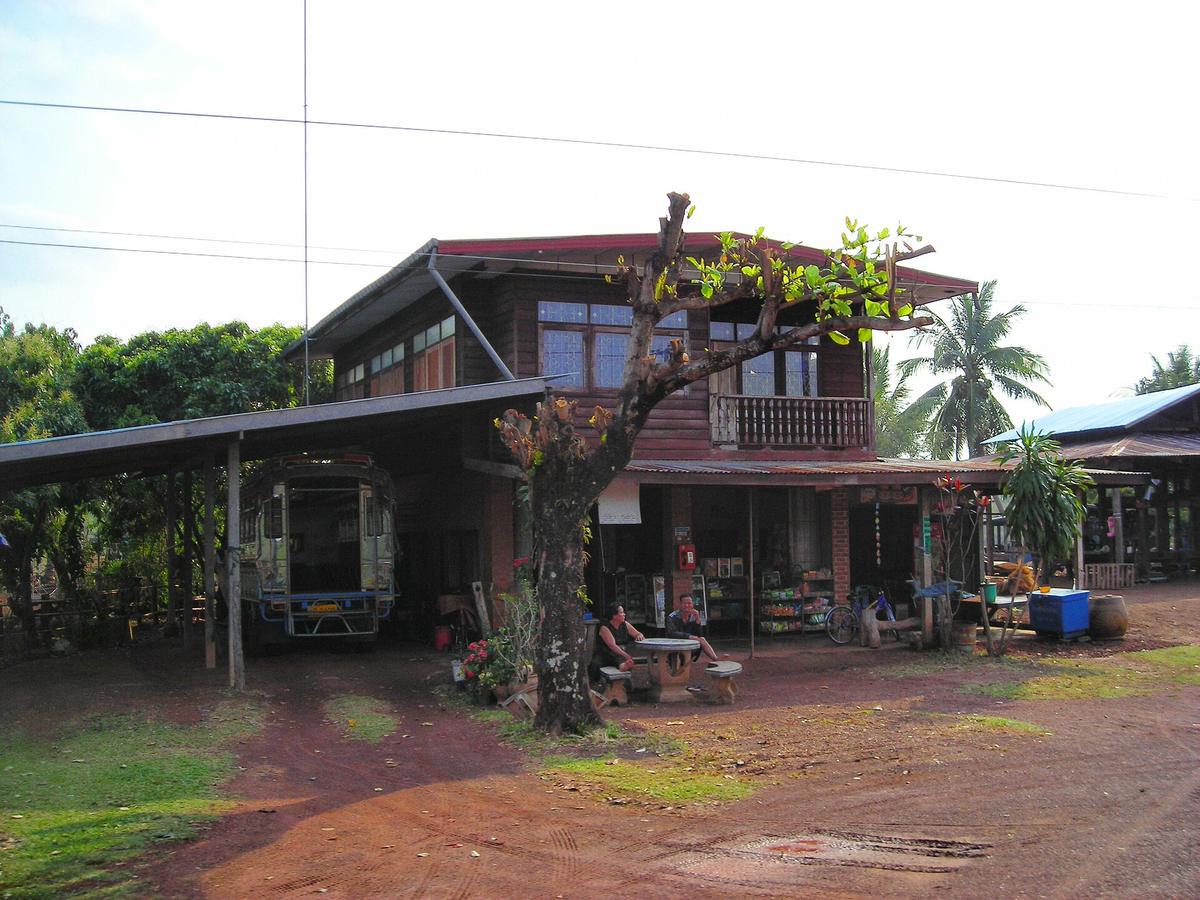
Skip Ton Tann Market. It is rebuilt for tourists. Plastic tables, pad thai with ketchup, prices marked up. Go instead to any local morning market near your guesthouse. You will know it by the steam and the odour of fermented fish. This is where Isaan breakfast happens.
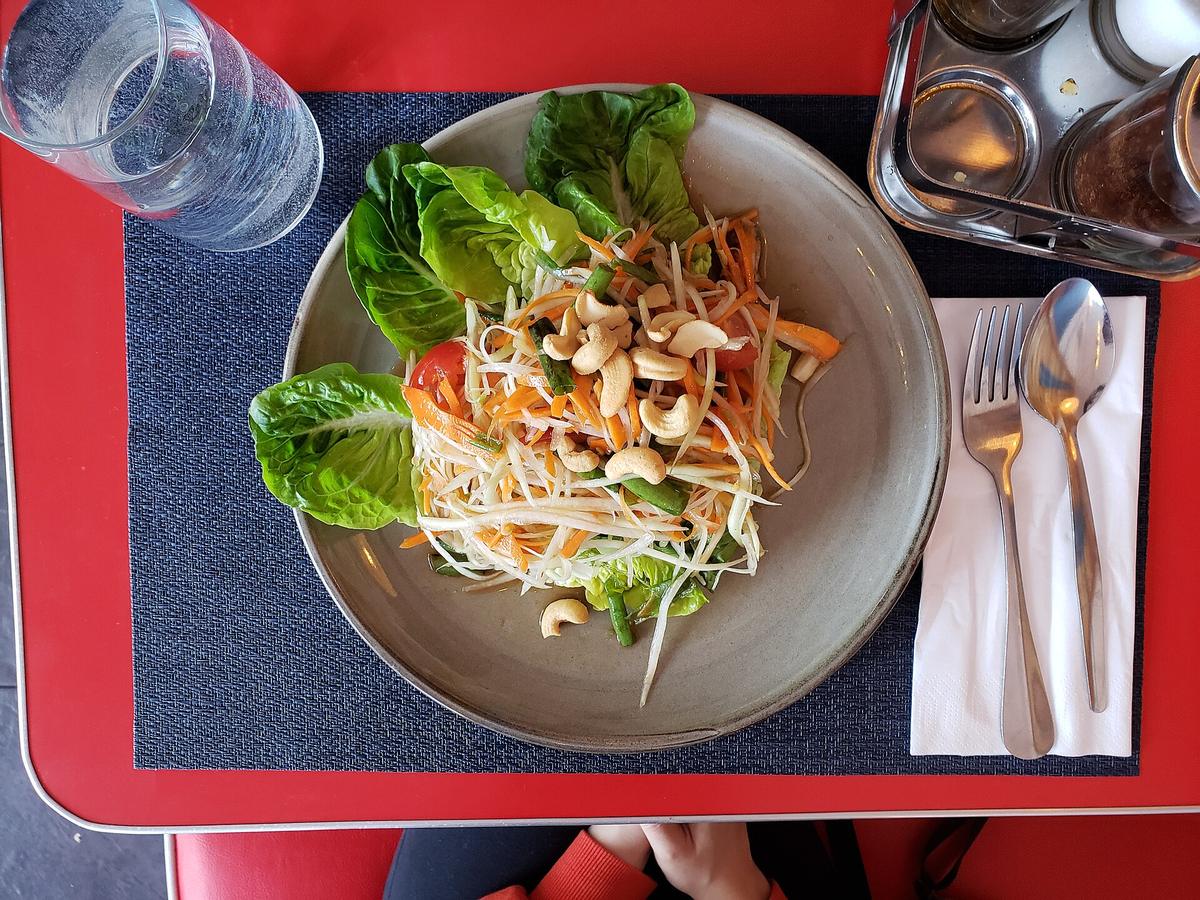
Buy a basket of sticky rice for 10 to 20 baht per serving. That is your utensil for the day. Find the som tam pla ra stall. The fermented fish paste version costs 30 to 50 baht. It is pungent, salty, and nothing like the sweet version they serve in Bangkok. Eat it with pork larb that costs 40 to 60 baht. The chilli level is not negotiable. You will sweat through your shirt by 08:00. That is the communal heat of a real som tam stall. The vendor does not ask if you want it mild. You take it how they make it.
The market is where you learn the texture of daily life in Isaan. Old women sell bundles of herbs you cannot name. Men drink iced coffee out of plastic bags. No one is performing. You are just there.
Silk Villages That Do Not Care About You
Chonnabot and the Weavers
Chonnabot village lies 55 kilometres from Khon Kaen. This is the mudmee silk centre of Isaan. The weavers work on looms under their houses. You can buy directly. Do not haggle hard. This is not a market stall. This is someone who spent four days on one metre of fabric.
Watch for a while before you buy. The rhythm of the shuttle, the way the weaver runs her fingers along the warp. The sound of the khene, the bamboo mouth organ, drifts through the village sometimes. It is not a show. A neighbour is practising.
Khmer Ruins Within Reach
If you want Khmer ruins, two options exist from Khon Kaen. Phimai Historical Park is 108 kilometres away. Phanom Rung Historical Park is 185 kilometres. Pick one. Phimai is flatter access, better for a day trip. Phanom Rung sits on an extinct volcano and the approach is more dramatic. Neither is crowded. You will share the stone corridors with maybe ten other people. The Khon Kaen National Museum charges 100 baht for foreign entry and 20 baht for Thai nationals. Worth the hour if you want context for the Khmer sites. The museum is small, quiet, well curated.
The City Landmarks Worth Your Time
Walk the Lake at Dusk
Bueng Kaen Nakhon lake wraps a 3.8 kilometre loop around the city centre. Walk it at dusk. The path is flat, the light is forgiving, and the locals are jogging or walking their dogs. The lake itself is not remarkable. What is remarkable is how unremarkable it feels. No jet skis. No beer bars. Just a city using its public space.
The Temple Viewpoint
Wat Nong Wang Phra Mahathat Kaen Nakhon rises 80 metres over the city. Nine floors. Take the lift to the top for the view. The temple complex below has some interesting murals, but do not spend more than 30 minutes here. It is a temple. It is fine. The real draw is looking down over a flat green province that stretches until the haze swallows it.
Two Lists for Your Day Planning
Do Not Skip
- Morning market breakfast. Arrive by 06:30. Eat som tam pla ra and larb moo with sticky rice.
- Chonnabot silk village. Go early before the heat peaks. Watch a weaver for 15 minutes before you buy.
- Bueng Kaen Nakhon at sunset. Walk the full 3.8 kilometre loop.
- Khon Kaen National Museum. Budget one hour. The Khmer stone carvings are the highlight.
- One night at a som tam street stall. Let the vendor choose the spice level. Drink a cold Leo.
Skip Without Guilt
- Central Plaza Khon Kaen. It is a shopping mall. You have one at home.
- Ton Tann Market. Inauthentic food stalls for package tourists.
- Dino Water Park. A generic water park with no regional relevance. Not even for kids unless you are desperate.

_-_Little_Thai_2024-06-14.jpg)
An Honest Caveat About Isaan
This region does not reward everyone. If you need a beach, a party street, a temple you can Instagram in 30 seconds, stay in Chiang Mai or Phuket. Isaan gives you nothing fast. The reward is cumulative. You get it on the third morning when the market vendor remembers your face and adds extra chilli because last time you did not flinch. You get it watching silk emerge from a loom at a pace that feels like meditation. You get it sitting on a plastic stool at dusk, eating something that costs 40 baht, while the khene player warms up nearby. That is the texture. It does not perform. It just is. That is what you are here for.
| Item | Value |
|---|---|
| Khon Kaen population (2019 official registration) | 114,459 |
| Khon Kaen elevation | 187 m above sea level |
| Khon Kaen municipal area | 46 km² |
| Bangkok to Khon Kaen by rail | 449 km |
| Overnight train departure/arrival | 20:25 to 04:58 |
| Second class A/C sleeper fare | 748–868 baht |
| Bus fare Bangkok to Khon Kaen | 380–650 baht |
| Khon Kaen to Chonnabot silk village | 55 km |
| Mudmee silk price per metre in 2024 | 300–2,500 baht |
| Som tam pla ra, street stall | 30–50 baht |
| Larb moo, street stall | 40–60 baht |
| Sticky rice basket (kratip) | 10–20 baht |
| Khon Kaen National Museum, foreigner | 100 baht |
| Khon Kaen National Museum, Thai national | 20 baht |
| Bueng Kaen Nakhon lake circumference | 3.8 km |
| Wat Nong Wang stupa height / floors | 80 m / 9 |
| Khon Kaen to Phimai Historical Park | 108 km |
| Khon Kaen to Phanom Rung Historical Park | 185 km |
More destinations in Thailand
Common Questions
How do I get from Bangkok to Khon Kaen without flying?
Take Special Express No. 25 overnight train from Krung Thep Aphiwat Central Terminal at 20:25. You arrive Khon Kaen at 04:58. The bus costs 380 to 650 baht depending on operator and class, but the train is more comfortable and arrives earlier.
How many days should I spend in Khon Kaen?
Three days is enough for the city itself: two mornings for markets, one afternoon for the museum and the lake, one half day for Wat Nong Wang. Add two more days if you want to visit Chonnabot silk village and one of the Khmer temple parks.
Is Phimai or Phanom Rung better for a day trip from Khon Kaen?
Phimai is 108 kilometres away, closer and flatter. Phanom Rung is 185 kilometres away but sits on an extinct volcano with a more dramatic setting. Choose Phimai if you want an easier day. Choose Phanom Rung if you want the approach to be part of the experience.
What should I eat in Khon Kaen that I cannot find in Bangkok?
Som tam pla ra, the fermented fish paste version. It costs 30 to 50 baht at a street stall. Larb moo costs 40 to 60 baht. Eat both with sticky rice from a basket that costs 10 to 20 baht per serving. The flavour profile is deeper and saltier than Central Thai versions.
Is Isaan safe for a solo traveller who does not speak Thai?
Yes. Violent crime is rare. The main challenge is the language barrier. Very few people in Khon Kaen speak English beyond basic phrases. Download a translation app. Learn how to say aroy mak (delicious) and khop khun (thank you). The people are direct but warm. You will be fine.
Read next
-
 When to Visit Thailand and When to Stay Far Away
When to go to Thailand depends on two monsoons and the Chiang Mai burning season. Here is how the regional weather windows actually work.
When to Visit Thailand and When to Stay Far Away
When to go to Thailand depends on two monsoons and the Chiang Mai burning season. Here is how the regional weather windows actually work.
-
 How to Get Around Thailand Without Losing Your Mind or Your Wallet
A practical guide to Thailand's transport network covering overnight trains from Krung Thep Aphiwat, budget flights from Don Mueang, and VIP buses to Chiang Mai.
How to Get Around Thailand Without Losing Your Mind or Your Wallet
A practical guide to Thailand's transport network covering overnight trains from Krung Thep Aphiwat, budget flights from Don Mueang, and VIP buses to Chiang Mai.
-
 What Thailand Costs When You Are Not on Holiday
Thailand looks cheap on holiday. Living here is different. Here is a real monthly breakdown of rent, food, visas, and the things that quietly add up.
What Thailand Costs When You Are Not on Holiday
Thailand looks cheap on holiday. Living here is different. Here is a real monthly breakdown of rent, food, visas, and the things that quietly add up.
-
 Bangkok
Everyone says to leave Bangkok fast. But the city shifts when you take the canal boats, walk the sois at dawn, and stop treating it like a layover.
Bangkok
Everyone says to leave Bangkok fast. But the city shifts when you take the canal boats, walk the sois at dawn, and stop treating it like a layover.
-
 Kanchanaburi
A guide to visiting Kanchanaburi's Death Railway, bridge, and war museums with the historical weight and respect these sites demand.
Kanchanaburi
A guide to visiting Kanchanaburi's Death Railway, bridge, and war museums with the historical weight and respect these sites demand.
-
 Krabi
Railay is where everyone starts in Krabi. But the province opens up when you head inland to the mangroves, the markets, and the limestone caves the boats skip.
Krabi
Railay is where everyone starts in Krabi. But the province opens up when you head inland to the mangroves, the markets, and the limestone caves the boats skip.
-
 Chiang Mai
 was meant to be a stopover. It became the place I measured other places against. Here is what that slow attachment feels like, smoke season included.
Chiang Mai
Chiang Mai was meant to be a stopover. It became the place I measured other places against. Here is what that slow attachment feels like, smoke season included.
-
 Phuket
Samet Nangshe asks for a 4am alarm and a dark drive through Phang Nga. Here is what that morning actually feels like and whether the view delivers.
Phuket
Samet Nangshe asks for a 4am alarm and a dark drive through Phang Nga. Here is what that morning actually feels like and whether the view delivers.
-
 Mae Hong Son
Everyone has an opinion on Pai. After the 762 curves and another stay, here is what still feels real and what feels like a backpacker theme park.
Mae Hong Son
Everyone has an opinion on Pai. After the 762 curves and another stay, here is what still feels real and what feels like a backpacker theme park.