Planning a Long Stay in Thailand When You've Never Been to Asia Before
First long stay in Thailand? Learn how to plan accommodation, transport, visas, and cultural prep that short-trip guides skip entirely.

Booking the flights is the easy part. The weeks that follow are where things get genuinely complicated. Every guide you find online was written for someone spending ten days ticking boxes, not for someone planning to actually live in Thailand for a month or more. The practical questions pile up fast. Where do you even start? How do you move between regions without everything falling apart? What do you need to know before you land that nobody bothered to mention?
This article addresses that gap. The space between having a confirmed ticket and actually feeling like you know what you are doing.
Before You Land: Key Things to Know
- Book your first two or three nights only. Negotiate longer stays in person after you arrive.
- Transport in Thailand does not follow the logic you are used to at home. Drop that assumption early.
- Know your visa category before you go. A tourist entry is not unlimited for all nationalities.
- Plan at least two to three weeks per region to actually settle rather than just pass through.
- Always carry Thai baht in cash. Local markets, transport options, and many guesthouses are cash only.
What a Long Stay in Thailand Actually Requires
A short trip lets you glide through on pure momentum. The hotel is pre-booked, the transfers are arranged, and the itinerary is tight enough that you never have to make a hard call. A long stay is different. You are, in a practical sense, temporarily relocating. That means you need systems, not just a packed bag.
Thailand is forgiving in many ways. It has enormous infrastructure for foreign visitors. Guesthouses, co-working spaces, and English-language signs are not hard to find in major areas. But the country is also large, regionally distinct, and full of transport and booking quirks that trip up first-timers. The good news is that most of this is learnable. You do not need to arrive knowing everything. You need to arrive knowing enough to handle week one, and then you build from there.
The most important mindset shift is accepting that slow travel is not just a pace. It is a different way of using a destination. You are not optimizing for the most temples seen or the most beaches visited. You are optimizing for a rhythm that feels sustainable. That shift changes how you plan accommodation, how you approach transport, and how you think about structure versus flexibility.
How to Structure Your Accommodation Without Locking Yourself In
One of the most common mistakes first-timers make is booking everything before they leave home. This feels responsible. In practice, it limits you and often costs more. Monthly rates at guesthouses, small apartments, and local hotels are almost always negotiated in person. Owners and landlords give better deals to people standing in front of them, and many of the best longer-stay options are not listed on any major platform at all.
The right approach is to book your first two or three nights in each major destination as a buffer. That covers the disorientation of arrival. After that, give yourself a few days to walk the neighborhood, check out a few different spots, and ask other travelers what they are paying. You will almost always find something better than what you locked in from overseas.
Each region in Thailand also has a genuinely different character for longer stays. It matters which you start with and how much time you give yourself in each. Bangkok and Chiang Mai suit people who want community and convenience. The south suits people who want to slow all the way down. Pai suits people who want cheap and remote. Understanding these differences before you book your internal flights saves a lot of course-correcting mid-trip.
Thailand's Major Slow-Travel Regions Side by Side
| Region | Monthly Budget | Internet Quality | Long-Stay Character |
|---|---|---|---|
| Bangkok | $900 to $1,500 | Excellent | Fast-paced, stimulating, strong transit hub for the rest of the country |
| Chiang Mai | $650 to $1,100 | Very good | Largest established expat and nomad community, very easy to settle in |
| Koh Lanta | $700 to $1,200 | Good | Quiet beach lifestyle, excellent value outside peak season |
| Pai | $450 to $800 | Moderate | Budget mountain living, small community, genuinely removed from the tourist trail |
| Krabi Town | $600 to $1,000 | Good | Practical southern base with solid transport access to islands and beyond |
Transport in Thailand Runs on Its Own Terms
Nothing disoriented me more in my first week than getting around. I had traveled in Europe before. I assumed things would work in a recognizable way. They do not. Thailand has a mix of transport options that are excellent in some ways and genuinely puzzling in others, and the best thing you can do is set aside your existing frame of reference entirely before you land.
Trains exist and are wonderful for long overnight journeys between Bangkok and the north or south. Buses cover most routes and range from cramped minivans to air-conditioned coaches that are better than you might expect. Within cities, songthaews (shared pickup trucks with rows of seats in the back) and tuk-tuks run on semi-fixed routes that locals understand and visitors have to learn through trial and error. Ride-hailing apps work well in Bangkok and Chiang Mai. In smaller towns, you are often renting a scooter or relying on a combination of asking around and walking. A few key things to know ahead of time:
- Many transport options require negotiating a fare before you get in. Always agree on a price first.
- Minivan and bus schedules are loose. Build buffer time into any connection that matters.
- Grab, the regional ride-hailing app, is excellent in major cities but largely absent in smaller ones.
- Overnight trains on popular routes sell out days in advance. Book these early, not the night before.
- Give yourself at least a few days of observation before renting a scooter. Thai traffic has its own flow and it takes time to read it.
The Logistics That Short-Trip Guides Never Cover
Most Thailand content online was written for someone on a two-week holiday. They do not need to think about data plans that last months, cash withdrawal fees across an extended stay, or what actually happens when you want a monthly accommodation rate that no booking platform is set up to offer. You do.
Getting a local SIM card at the airport is one of the first things to do after clearing customs. The major carriers, AIS, DTAC, and True Move, all have booths and offer long-term data packages at prices that make international roaming look absurd. Monthly plans with generous data allowances are standard. For cash, Bangkok has ATMs everywhere, but most charge a per-withdrawal fee. Withdrawing larger amounts less frequently saves money across multiple months in a way that adds up more than you would expect.
Booking windows also work differently for longer stays. Accommodation platforms are designed around short-term bookings. Monthly rates are almost always negotiated directly, in person, or through local expat groups on Facebook, where insider knowledge about which guesthouses offer deals tends to circulate. Low-cost carrier flights between Thai cities are genuinely affordable if you book even a week ahead, but prices rise sharply around Thai public holidays in ways that catch newcomers off guard. For a detailed breakdown of how all of this works in practice, from SIM options to booking timing across different parts of the region, Asia travel hacks covers the operational detail that a single article cannot fully hold.
Understanding the Visa Reality for Longer Stays
This is the part most first-timers leave until too late, and it creates unnecessary stress that is entirely avoidable. Thailand's visa situation has shifted over the years. Many nationalities now receive a 60-day exemption on arrival, which is genuinely useful for a first stay. But if you plan to stay for multiple months, move between regions, or base yourself in Thailand over a longer stretch, you need a clear plan before you land, not after.
A straightforward 30-day extension at a local immigration office is cheap and a standard process that most long-term visitors use at least once. Some travelers do a border run, briefly leaving Thailand and re-entering to reset their entry stamp. Others apply for a tourist visa before traveling to get more time upfront. For people planning genuinely extended stays, Thailand has introduced longer-term visa categories worth researching. Whatever your nationality and timeline, the specific rules for how long you can stay and what requires a formal application are laid out clearly in Thailand's official visa and stay guidance. Read it before you book your flights, not after you arrive and start panicking.
Building Cultural Fluency Before Week One Ends
Cultural adaptation sounds more daunting than it is. Most of what you genuinely need to know is learnable within your first few days on the ground. Thailand is a Buddhist country where respect for temples, monks, and the monarchy is embedded in everyday life. None of it is hard to navigate once you understand the baseline expectations.
Learning even a handful of Thai words changes your experience in ways that are hard to predict until you try it. Thais notice and appreciate the effort, and it shifts the dynamic in small but meaningful ways. Knowing how to say thank you, how to greet someone, and how to politely decline covers the vast majority of everyday interactions. Street food is central to daily life here, it is safe, it is exceptional, and starting to eat from street stalls early puts you in a completely different relationship with a place than eating exclusively in tourist-facing restaurants does.
A few things that matter more than most travel guides mention:
- Remove your shoes before entering temples, many guesthouses, and some local homes. This is a firm cultural expectation, not a loose suggestion.
- Cover your shoulders and knees at temples. Sarongs are available at most major temple entrances if you forget.
- Keep your voice low in public, especially in moments of frustration. Displays of anger are considered deeply disrespectful and will not get you anywhere.
- The concept of saving face shapes a huge amount of daily interaction. Patient, calm persistence gets results. Direct confrontation almost never does.
The Thailand That Opens Up When You Actually Stay
There is a version of Thailand that only becomes visible after you have been somewhere long enough to stop being a newcomer. The person running the coffee cart on your street learns your order. The family at the guesthouse starts waving you over for meals. You know which market has the best produce and when it sets up. You stop reaching for your phone to translate every sign and start reading context instead.
This is what a long stay gives you that a two-week trip cannot. It is not about seeing more. It is about going deeper into fewer places and letting those places actually change how you move through the world. The preparation that feels overwhelming now, the accommodation strategy, the transport logic, the visa planning, all of it fades into background noise once you are there and settled. The hard part was never Thailand. The hard part is trusting yourself enough to stay long enough to find that out.
Read next
-
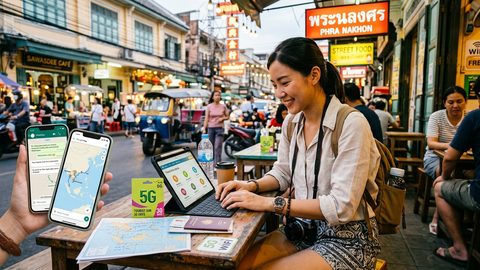 Staying Connected in Thailand and Southeast Asia on Your First Solo Trip
Ease first solo trip nerves in Thailand and Southeast Asia with offline maps, SIM and eSIM advice, arrival plans, and reliable backup access.
Staying Connected in Thailand and Southeast Asia on Your First Solo Trip
Ease first solo trip nerves in Thailand and Southeast Asia with offline maps, SIM and eSIM advice, arrival plans, and reliable backup access.
-
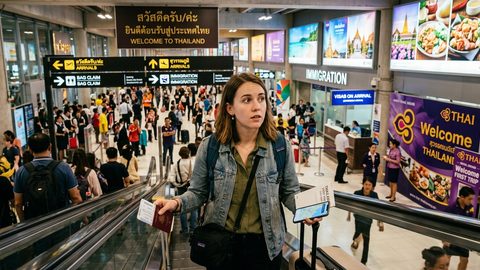 What Anxious First-Timers Should Know Before Flying to Thailand
Nervous about your first long-haul flight to Thailand? Real advice on layovers, surviving 20-plus hours in transit, and what those in-flight surprises actually mean.
What Anxious First-Timers Should Know Before Flying to Thailand
Nervous about your first long-haul flight to Thailand? Real advice on layovers, surviving 20-plus hours in transit, and what those in-flight surprises actually mean.