Visiting the Death Railway and Kanchanaburi War Museums Responsibly
A guide to visiting Kanchanaburi's Death Railway, bridge, and war museums with the historical weight and respect these sites demand.
- Flag
-

- ISO code
- TH
- Currency
- THB
Visiting the Death Railway and Kanchanaburi War Museums Responsibly
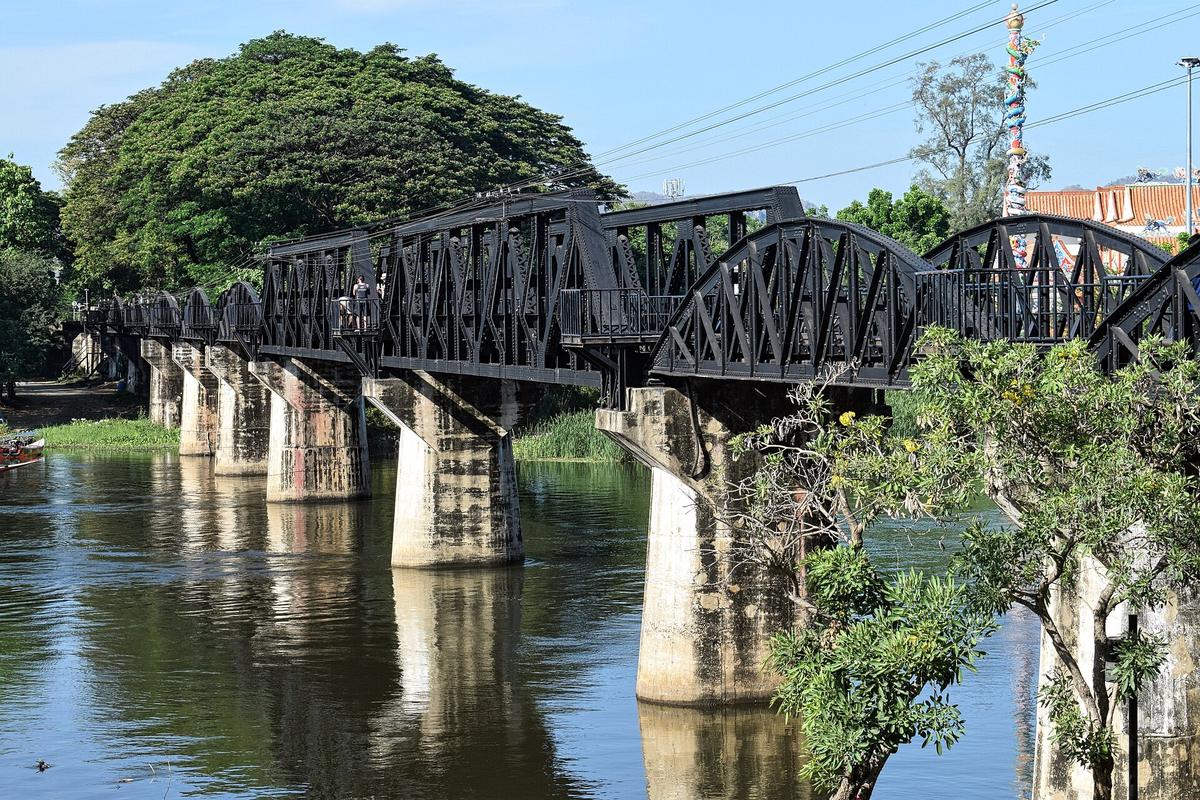
The train from Bangkok rolls into Thonburi at 07:50. Third class, 100 baht, no air conditioning, no cushions. Two and a half hours later you step onto the platform at Kanchanaburi and the first thing you see is the bridge. Not the original. The original was bombed in 1945. But the steel trusses that replaced it still carry trains across the Mae Nam Kwae every day, and tourists walk the tracks with their phones out, smiling at the river.
That is the tension this page exists to navigate. The River Kwai Bridge was built by men who died building it. The Death Railway killed an estimated 12,000 Allied prisoners of war and 90,000 Asian forced labourers. It is a place of profound suffering. It is also a tourist attraction, complete with souvenir stalls and a light and sound show in late November and early December that you should skip not because it is disrespectful but because it is crowded and turns the site into a stage. You can visit these sites with gravity. You can learn the story without performing grief. The sequence you choose determines which experience you get.
Start at the Thailand Burma Railway Centre
Begin at the Thailand Burma Railway Centre. Not the JEATH War Museum. Not the bridge itself. The Thailand Burma Railway Centre at 284/66 Sangchuto Road is the essential first stop. Admission is 160 baht for adults at the 2025 rate published by the museum, it opens at 09:00 daily, and it tells the story with context you cannot get anywhere else in Kanchanaburi. The exhibits are chronological, human scale, and historically rigorous. You see the photographs of the men who built the railway. You read their letters. You understand the geography of the 415 kilometre line that took from June 1942 to October 1943 to carve through jungle and rock. By the time you finish the museum you know what you are about to walk through.
The JEATH War Museum on River Kwai Road costs 50 baht and opens from 08:30 to 18:00 daily, but its exhibits are dated, its historical accuracy is mixed, and it includes non war displays that dilute the focus. Skip it. Tarah would skip it. You should too.
Then the Kanchanaburi War Cemetery
From the centre walk the five minutes to the Kanchanaburi War Cemetery on Saeng Chuto Road, known as Don Rak. It holds 6,982 Commonwealth and Dutch war dead. It is free, open 08:00 to 17:00 daily, and it is quiet. This is where the museum's numbers become names. The rows of identical headstones. The ages carved in stone. The nationalities side by side. Spend twenty minutes here. Read the inscriptions. Do not take photographs of yourself among the graves. The burial ground is not a backdrop. It is the end of the story for thousands of men who were younger than most of the tourists taking selfies on the bridge.
Walk the Bridge Last
Then go to the bridge. Saphan Mae Nam Kwae, built from 1942 to 1943 by Allied POWs and Asian romusha labourers. Walk the track. Look at the river. But do not take a smiling photograph on the rails. Do not do a handstand on the sleepers. The bridge is not a prop. It is an industrial object built under conditions of forced labour, and the men who died constructing it did not choose to be there. The best way to honour that is to walk across it once, in silence, and then move on. The worst way is the light and sound show in late November and early December, which turns the bridge into a stage set. That week is the single most disrespectful period of the year to visit. Avoid it.
Hellfire Pass: The Second Day
If you have a second day, make the trip northwest to Hellfire Pass. The Hellfire Pass Memorial Museum is 80 kilometres from Kanchanaburi town on Highway 323, it opens at 09:00 to 16:00 daily, admission is free, and the 4 kilometre return walking trail follows the original railway cutting through rock so dense that prisoners worked by hand and candlelight. The audio guide rental costs 250 baht at the 2025 rate published by the museum. Take it. The guide paces the walk with survivor testimony and the names of the men who died in this cutting. The trail surface is uneven rock, the original railway bed, so wear sturdy shoes. Do not rush the walk. Allow two hours minimum. Do not play music on a speaker. Do not talk loudly. The sound that stays with you on Hellfire Pass is the wind in the bamboo, and that is the whole point.

How to Build Your Day: the Responsible Sequence
The order you visit these sites changes what you feel at each one. If you start at the bridge you see a tourist attraction. If you start at the museum and the burial ground you see the consequence of history before you see the monument. That sequence is the responsible one, and it requires a full day. Here is exactly how to structure it, with times and costs from the 2025 rates published by each site.
The Morning: Museum and Cemetery
Arrive from Bangkok on the 07:50 train from Thonburi, 100 baht, 2.5 hours. You reach Kanchanaburi around 10:30. Walk from the platform to the Thailand Burma Railway Centre at 284/66 Sangchuto Road, a ten minute walk. It opens at 09:00, so you arrive as the morning crowds are still thin. Budget 90 minutes inside. Pay 160 baht. The museum is compact but dense. Do not try to see it in 30 minutes.
At 12:00 walk the five minutes to the Kanchanaburi War Cemetery on Saeng Chuto Road. Free, open until 17:00, but empty at lunchtime because most tour groups are on the bridge. Spend 20 minutes. Read the inscriptions. Count how many men died under 25. Then have lunch at one of the restaurants on Saeng Chuto Road near the river. Avoid the overpriced tourist cafes directly beside the bridge.
The Afternoon: Bridge and the Death Railway Train
At 13:30 walk to the bridge. This puts you there after the morning tour buses have left and before the afternoon groups arrive. It is quieter. Walk the track from the town side to the far bank and back. Twenty minutes total. No photographs of yourself on the rails. If you want a photograph, photograph the river. Photograph the steelwork. Leave your own face out of it.
At 14:30 walk back to the platform for the 16:26 train to Nam Tok, 100 baht for the Death Railway section. This train crosses the bridge and continues through the gorge. It is the same route the prisoners built. The journey takes one hour. Sit on the right side for the best view of the river. The tracks are close to the edge. Do not lean out. The train does not stop at the viewing points.
Return to Kanchanaburi by 17:30. The day is done. You have seen the museum, the burial ground, the bridge, and the railway line itself in the correct order. The fatigue you feel at the end is appropriate. It is not the same fatigue as the men who built the line, but it is a form of acknowledging that the labour was real.
The Second Day: Floating Guesthouses and Erawan Falls
If you have a second day, book a boat transfer to a floating guesthouse on the River Kwai Noi, upstream from Kanchanaburi town. Rates range from 800 to 3,500 baht per night at the 2025 prices published by guesthouses, with check in at 14:00 and check out at 11:00. The boat transfer is included in most bookings. The guesthouses are basic. The water is brown. The experience is quiet. It is a place to sit with what you have seen, not to Instagram the sunset.
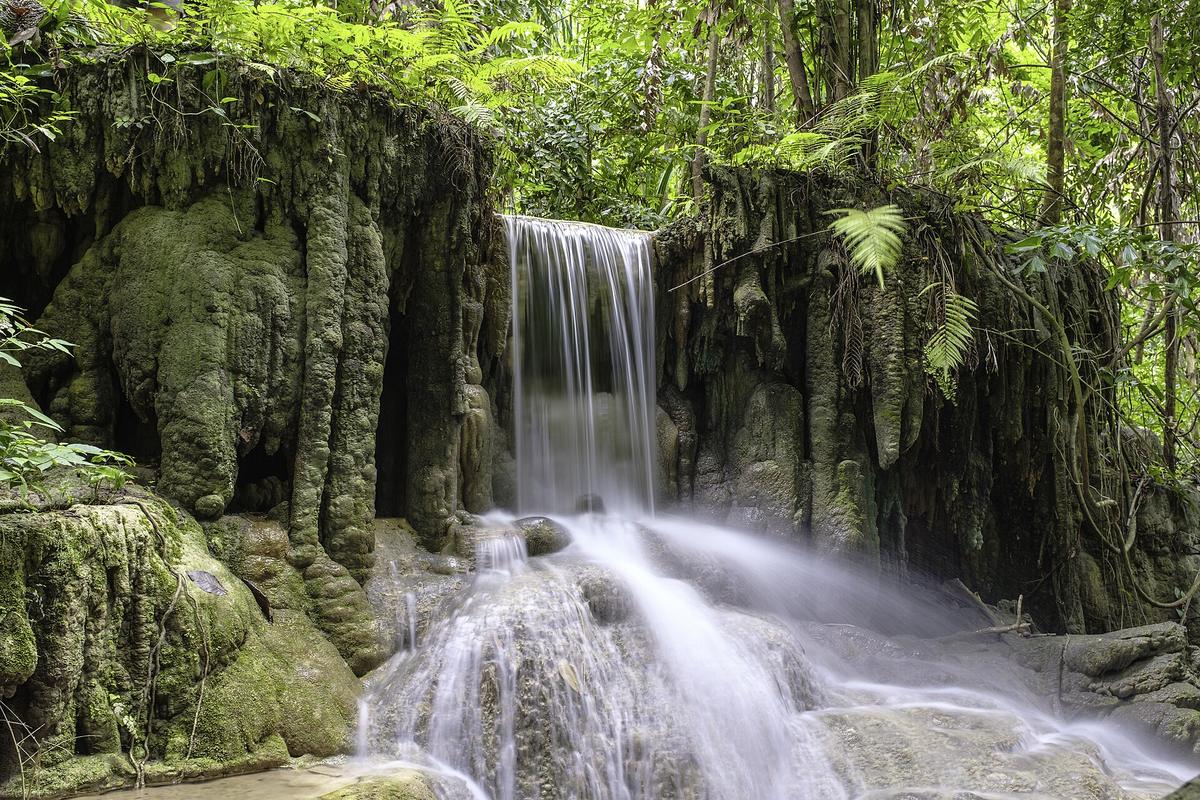
On your way back to town, stop at Erawan National Park, 65 kilometres northwest on Highway 3199, admission 300 baht for foreign adults. The seven tiers of Erawan Falls climb 2 kilometres one way, and the seventh tier pool is deep enough for swimming. Swim in the morning before the crowds arrive. The park opens at 08:00. Arrive at 07:45.
What to Skip Without Guilt
Three things in Kanchanaburi and one event are not worth your time. The JEATH War Museum at the Wat Chaichumphon site costs 50 baht and opens 08:30 to 18:00 daily, but the exhibits are dated and the curation is mixed. It includes displays that have nothing to do with the railway. The museum does not hold itself to the same historical standard as the Thailand Burma Railway Centre. Skip it.
The Tiger Temple at Wat Pha Luang Ta Bua is permanently closed since 2016. It does not exist. Do not look for it. Do not ask locals for directions.
The Bridge on the River Kwai during the Kanchanaburi Light and Sound Show week, late November to early December every year, is the single worst time to visit. The bridge becomes a stage. The crowds are thick. The tone is wrong. If your dates are flexible, avoid that week entirely.

Getting There Without a Tour
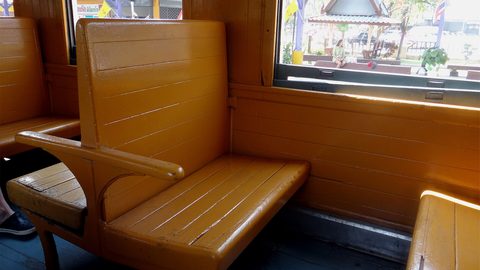
The train from Bangkok is the cheapest and most direct option. Depart from Thonburi, also called Bangkok Noi. Two trains daily in 2025, at 07:50 and 13:55. The 07:50 is the one you want. It arrives in Kanchanaburi around 10:30. The fare is 100 baht for third class. No booking needed. Pay at the counter. The carriage has wooden benches, fans, open windows, and vendors who walk through selling fruit and fried chicken. It is not comfortable. It is the train that goes over the bridge. That matters.
Once in Kanchanaburi you can walk everywhere in town. The Thailand Burma Railway Centre, the war burial ground, and the bridge are within a 15 minute walk of each other. The train to Nam Tok along the Death Railway section departs Kanchanaburi at 06:07, 10:35, and 16:26. The 16:26 is the one that works after a day at the museum and cemetery. It costs 100 baht. The journey is one hour. You return to Kanchanaburi on the same train or on a later one. Check the schedule at the platform. The trains are not frequent. Miss the 16:26 and your next option is the 06:07 the following morning.
Reaching Hellfire Pass
For Hellfire Pass you need transport. The memorial museum is 80 kilometres northwest on Highway 323. No public train runs that far. You can hire a driver in Kanchanaburi town for about 1,200 to 1,500 baht for a half day trip. Negotiate the price before you leave. Or join a group minivan tour from a local travel agency on Sangchuto Road. The museum opens at 09:00. Arrive by 09:30 to beat the tour groups. The walking trail takes two hours minimum. The audio guide is essential. Pay the 250 baht at the counter. Do not skip it.
Common Questions
Is it disrespectful to take photos at the Death Railway sites?
Photograph the place, not yourself. The bridge and the burial ground are historically significant. A selfie on the railway tracks or among graves reduces the site to a backdrop. Take photos of the landscape, the architecture, the river. Keep your phone in your pocket on Hellfire Pass.
Should I visit the JEATH War Museum or the Thailand Burma Railway Centre?
The Thailand Burma Railway Centre. It costs 160 baht, opens 09:00 to 17:00 daily, and has historically rigorous exhibits. The JEATH War Museum costs 50 baht but has dated displays and mixed accuracy. Skip the JEATH. Visit the Centre first, then the burial ground, then the bridge.
Can I visit Erawan Falls and Hellfire Pass in one day?
Not comfortably. They are 45 minutes apart by road but each requires half a day. Hellfire Pass takes two hours minimum on the walking trail. Erawan Falls takes three hours minimum to climb the seven tiers. Do one per day. Hellfire Pass for history, Erawan for swimming.
How do I get to Kanchanaburi from Bangkok without a tour?
Take the 07:50 train from Thonburi (Bangkok Noi) for 100 baht. It arrives in 2.5 to 3 hours. No booking needed. Pay at the counter. The 13:55 train also runs but arrives too late for a full day of sites. The morning train is the one to take.
Read next
-
 Getting to Kanchanaburi by Train Songthaew and Scooter
How to reach Kanchanaburi on the slow train from Thonburi, then navigate town by songthaew and scooter to the bridge, museums, and Erawan independently.
Getting to Kanchanaburi by Train Songthaew and Scooter
How to reach Kanchanaburi on the slow train from Thonburi, then navigate town by songthaew and scooter to the bridge, museums, and Erawan independently.
-
 Thailand After Living Here What I Would Tell You Before You Come
Thailand changes when you stop passing through and start staying. Here is what I learned about the rhythms, the frustrations, and the quiet moments nobody posts.
Thailand After Living Here What I Would Tell You Before You Come
Thailand changes when you stop passing through and start staying. Here is what I learned about the rhythms, the frustrations, and the quiet moments nobody posts.
-
 It Is Okay to Be a Little Lost in Thailand
Getting lost in Chiang Mai's old city sois is not a mistake. It is the moment the real trip begins, with the moat always there to guide you back.
It Is Okay to Be a Little Lost in Thailand
Getting lost in Chiang Mai's old city sois is not a mistake. It is the moment the real trip begins, with the moat always there to guide you back.
-
 On Being Told Millennials Should Stop Travelling and Buy a Condo
The real numbers behind a life in Chiang Mai versus a mortgage back home. A financial argument for why millennials are not wrong to choose travel.
On Being Told Millennials Should Stop Travelling and Buy a Condo
The real numbers behind a life in Chiang Mai versus a mortgage back home. A financial argument for why millennials are not wrong to choose travel.
-
 Solo Female Travel in Southeast Asia Without the Hype or the Fear
Practical safety advice for solo female travel in Chiang Mai, from navigating the Sunday walking street to taking a Grab taxi alone at night.
Solo Female Travel in Southeast Asia Without the Hype or the Fear
Practical safety advice for solo female travel in Chiang Mai, from navigating the Sunday walking street to taking a Grab taxi alone at night.
-
 Staying Connected in Thailand and Southeast Asia on Your First Solo Trip
Ease first solo trip nerves in Thailand and Southeast Asia with offline maps, SIM and eSIM advice, arrival plans, and reliable backup access.
Staying Connected in Thailand and Southeast Asia on Your First Solo Trip
Ease first solo trip nerves in Thailand and Southeast Asia with offline maps, SIM and eSIM advice, arrival plans, and reliable backup access.
-
 What Anxious First-Timers Should Know Before Flying to Thailand
Nervous about your first long-haul flight to Thailand? Real advice on layovers, surviving 20-plus hours in transit, and what those in-flight surprises actually mean.
What Anxious First-Timers Should Know Before Flying to Thailand
Nervous about your first long-haul flight to Thailand? Real advice on layovers, surviving 20-plus hours in transit, and what those in-flight surprises actually mean.
-
 Planning a Long Stay in Thailand When You've Never Been to Asia Before
First long stay in Thailand? Learn how to plan accommodation, transport, visas, and cultural prep that short-trip guides skip entirely.
Planning a Long Stay in Thailand When You've Never Been to Asia Before
First long stay in Thailand? Learn how to plan accommodation, transport, visas, and cultural prep that short-trip guides skip entirely.