The Thailand I Know After Calling It Home
Thailand changes when you stop passing through and start staying. Here is what I learned about the rhythms, the frustrations, and the quiet moments nobody posts.
- Flag
-

- ISO code
- TH
- Population
- 69,428,524
- Currency
- THB
- Dial code
- +66
The Thailand I Know After Calling it Home
Instagram shows you Thailand as a pastel postcard: limestone karsts rising from emerald water, monks in saffron robes walking through temple gates at golden hour, a single bowl of pad thai arranged on a banana leaf. What it does not show you is the noise. Thailand is loud. The 7-Elevens play their chime at full volume at 3am. The songthaew driver revs his engine while you try to order khao soi. The temple speaker system crackles to life at 6am for morning prayers. That is not a bug. That is the country.
The real Thailand, the one you start to understand after two months instead of two weeks, is not a resort. It is a country that works differently from yours. The bureaucracy runs on photocopies and patience. The friendships happen because you keep showing up to the same soi dog noodle stall. The quiet moments come at unexpected times: a 30-baht songthaew ride up to Doi Suthep at dawn with nobody else on board, a bowl of 50-baht khao soi in a Santitham shop where the owner remembers your name. That is what you pay for. Not the karsts. The rhythm.


- Getting There: Bangkok to Chiang Mai: Overnight train (2nd class AC sleeper lower berth) 941-1,046 THB, 12-14 hours. Budget flight 800-1,800 THB, 1 hour 10 minutes. VIP bus 600-800 THB, 9-11 hours.
- Daily Costs in Chiang Mai: Street food meal 40-60 THB. Sit-down restaurant with drink 120-250 THB. Songthaew within old city 30 THB. Scooter rental per day 150-250 THB. Laundry per kilo 30-40 THB.
- Rainy Season Timing: Northern Thailand and Andaman coast: May-October (southwest monsoon). Gulf of Thailand: October-December (northeast monsoon).
- Chiang Mai Burning Season Peak: Mid-February to mid-April. AQI range: 150-450+ on bad days.
- Visa Duration for Eligible Passport Holders: Visa exemption on arrival: 60 days (2024 policy). Extend by 30 days at immigration for 1,900 THB. Single-entry tourist visa: 60 days, also extendable by 30 days.
What the Guidebooks Leave Out
The first thing that hits you is not the heat. It is the smell. The collision of grilled pork skewers, diesel exhaust, jasmine garlands, and open drains. You get used to it by day three. By month three you miss it when you leave.
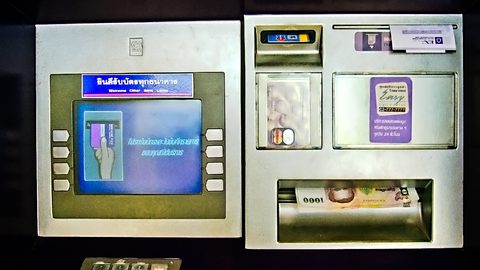
The second thing is that nothing happens fast. You will stand at an immigration counter for 90 minutes because the officer is handwriting your extension into a ledger. You will pay the 220-baht ATM fee every time you pull cash because your bank does not reimburse it. You will learn that Grab minimum fare in Chiang Mai is 60-70 baht but a songthaew costs 30 baht and you will take the songthaew. This is not inconvenience. This is the price of living in a country that does not pretend to be efficient.
The Weather Reality
The tourist board divides the year into three seasons. Residents divide it into two: tolerable and not. The not period varies by region. Chiang Mai's burning season runs mid-February to mid-April, when farmers burn crop residue and the AQI climbs from 150 to 450+. You do not go outside. You buy an air purifier. You learn what a large Chang at 7-Eleven tastes like when you cannot open the window.
The rainy season is less punishing. Northern Thailand and the Andaman coast get the southwest monsoon from May to October. The Gulf of Thailand waits until October to December. Rain comes in 20-minute explosions. You dry out by noon. The upside: Doi Inthanon National Park entry fee stays at 300 baht and the waterfalls actually run.
Where Your Money Goes
Your first month's budget will be wrong. You budget for the apartment and forget the deposit. You budget for food and forget the scooter rental. You budget for the visa extension and forget the 1,900 baht fee plus the half day you lose at immigration.
Rent in Chiang Mai's Nimman area runs 6,000 to 10,000 baht for a basic studio. Santitham, 10 minutes north, costs 4,000 to 7,000. You can eat well on 150 baht a day if you stick to street stalls. A co-working space day pass is 200 to 350 baht. A yoga class drop-in is 200 to 300 baht. A gym day pass is 100 to 200 baht. These numbers do not include the scooter.
Scooter rental runs 150 to 250 baht per day or 2,500 to 3,500 per month. You need an International Driving Permit stamped for motorcycles. Without it, police checkpoints cost you 500 to 1,000 baht on the spot. With it, you still need insurance. The hospital bill for a motorbike accident is not a hypothetical. It is the reason you buy travel insurance that covers motorcycles.
The Friendships and the Frustrations
You do not meet Thais in tourist bars. You meet them at the laundry counter. At the soi pet market. At the 7-Eleven where you both buy the same Chang. The friendships that last are the ones built on repetition, not on a conversation during a cooking class. Your neighbor in the Santitham apartment who waves every morning for two months before she asks your name. The khao soi vendor who charges you 50 baht instead of 60 after the third visit. That is the social fabric. It is slow. It is real.
But the frustrations are real too. The 90-day report for long-term visas is a ritual you never stop resenting. The overstay fine of 500 baht per day, capped at 20,000 baht, is generous compared to other countries, but you still do not want to pay it. The ATM withdrawal limit of 20,000 to 30,000 baht per transaction means you visit the machine twice a week. The SIM card you bought at the airport drops to 10 to 15 Mbps after you hit the fair-use threshold. You learn to download maps before you leave the apartment.
Getting Out Of Bangkok
You do not stay in Bangkok. You arrive, you see the Grand Palace for 500 baht, you leave. The city is a transit hub. The overnight train to Chiang Mai is the correct choice. Book second class AC sleeper lower berth for 941 to 1,046 baht. The 12-to-14-hour ride is not comfortable. It is an experience. The first class sleeper at 1,453 to 1,653 baht buys you a tiny private cabin and a sink. Neither gets you there faster. Both get you there with a story.
The bus is cheaper at 600 to 800 baht for VIP 24-seat, but the 9-to-11-hour ride is a test of lumbar endurance. The budget flight is 800 to 1,800 baht one way and takes 1 hour 10 minutes. You book the flight if you value your morning. You book the train if you value the memory.
The Islands Are A Decision
You do not island hop. You pick one. Koh Tao for Open Water dive certification at 9,000 to 11,000 baht. Koh Phangan for a full moon party that requires a 3-to-5-night minimum stay at 2 to 4 times normal prices, or a basic bungalow for 400 to 800 baht per night if you arrive any other week. The overnight train from Bangkok to Surat Thani costs 758 to 1,500 baht depending on class. The flight to Krabi or Phuket costs 1,000 to 2,500 baht. The choice is time versus money. It always is.
| Expense | Price Range (THB) | Notes |
|---|---|---|
| Chiang Mai monthly apartment (Nimman) | 6,000 - 10,000 | Basic studio, varies by condition and location |
| Chiang Mai monthly apartment (Santitham) | 4,000 - 7,000 | Lower cost, further from nightlife |
| Scooter rental per month | 2,500 - 3,500 | Includes basic insurance, not collision |
| Street food per meal | 40 - 60 | Khao soi, pad kra pao, grilled meats |
| Co-working day pass | 200 - 350 | Unlimited coffee at most spaces |
| Gym day pass | 100 - 200 | Often includes sauna and showers |
| Yoga drop-in class | 200 - 300 | Mats provided at most studios |
| Laundry per kilo | 30 - 40 | Takes 12-24 hours |
| Large Chang at 7-Eleven | 55 | Cheapest place to buy beer |


Where Nobody Goes: the Isaan Reality
Isaan gets the fewest foreign visitors of any Thai region. The Tourism Authority of Thailand data is clear on this. The bus from Bangkok to Ubon Ratchathani costs 500 to 700 baht and takes 8 to 10 hours. A local meal costs 30 to 50 baht. The region is flat, dusty, hot, and almost entirely overlooked. You go to Isaan not for beaches or mountains but for the quiet realization that Thailand is not a tropical paradise. It is a farming country with food that will ruin all other Thai food for you. The grilled chicken at a market in Ubon costs 40 baht and tastes like something you cannot get in Bangkok. That is the Isaan promise. It is unglamorous. It is worth the bus ride.
The Border Is Not A Vacation
You will eventually do a visa run. The minivan from Chiang Mai to Mae Sai and Tachileik costs 500 to 700 baht, plus a 500-baht Myanmar entry fee. You leave at 6am. You return at 6pm. You spend four hours in a queue and 15 minutes in Myanmar. It is not a day trip. It is paperwork with a noodle break. The 2024 visa exemption of 60 days for UK, US, EU, AU, and NZ passport holders means you do this less often than before, but you still do it. Budget for it. Budget for the 1,900-baht extension fee. Budget for the frustration.
What You Actually Bring Home
You do not bring home a new perspective on Buddhism. You do not bring home a tan. You bring home a 30-baht songthaew habit. A tolerance for loud temple speakers at dawn. A 4,000-baht apartment in Santitham that has no hot water. A khao soi vendor who knows your order. The souvenirs that matter are not from the night market. They are the ways you changed without noticing. You stop rushing. You stop planning. You stop caring that the Grab is 10 baht more than the songthaew. You start saying "maa loi dee" when someone asks how your day was, even though you never learned how to say it properly. That is what staying does to you.
Regions & cities in Thailand
-
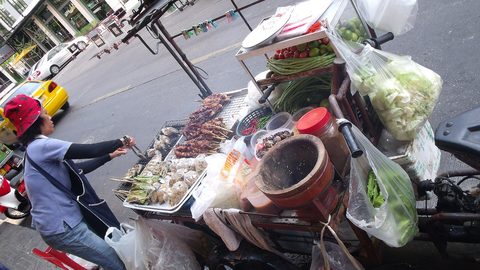 Bangkok
Everyone says to leave Bangkok fast. But the city shifts when you take the canal boats, walk the sois at dawn, and stop treating it like a layover.
Bangkok
Everyone says to leave Bangkok fast. But the city shifts when you take the canal boats, walk the sois at dawn, and stop treating it like a layover.
-
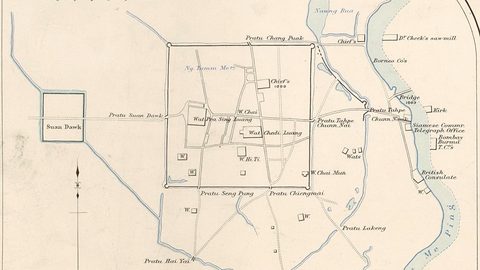 Chiang Mai
 was meant to be a stopover. It became the place I measured other places against. Here is what that slow attachment feels like, smoke season included.
Chiang Mai
Chiang Mai was meant to be a stopover. It became the place I measured other places against. Here is what that slow attachment feels like, smoke season included.
-
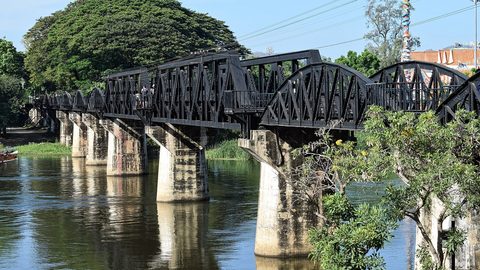 Kanchanaburi
A guide to visiting Kanchanaburi's Death Railway, bridge, and war museums with the historical weight and respect these sites demand.
Kanchanaburi
A guide to visiting Kanchanaburi's Death Railway, bridge, and war museums with the historical weight and respect these sites demand.
-
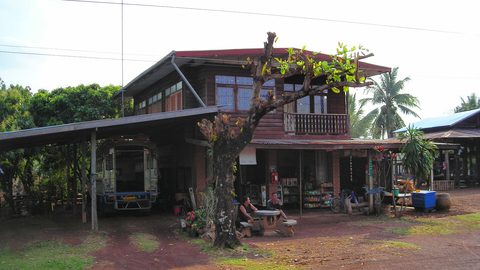 Khon Kaen
Isaan is the vast northeast region most travellers skip. Starting in Khon Kaen, I found a Thailand of silk weavers, fiery salads, and genuine welcome.
Khon Kaen
Isaan is the vast northeast region most travellers skip. Starting in Khon Kaen, I found a Thailand of silk weavers, fiery salads, and genuine welcome.
-
 Krabi
Railay is where everyone starts in Krabi. But the province opens up when you head inland to the mangroves, the markets, and the limestone caves the boats skip.
Krabi
Railay is where everyone starts in Krabi. But the province opens up when you head inland to the mangroves, the markets, and the limestone caves the boats skip.
-
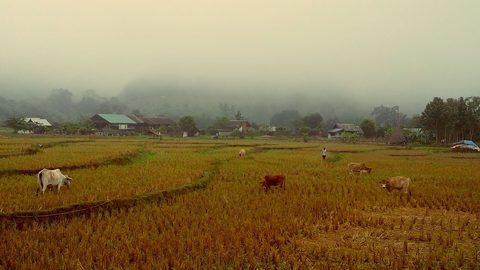 Mae Hong Son
Everyone has an opinion on Pai. After the 762 curves and another stay, here is what still feels real and what feels like a backpacker theme park.
Mae Hong Son
Everyone has an opinion on Pai. After the 762 curves and another stay, here is what still feels real and what feels like a backpacker theme park.
-
 Phuket
Samet Nangshe asks for a 4am alarm and a dark drive through Phang Nga. Here is what that morning actually feels like and whether the view delivers.
Phuket
Samet Nangshe asks for a 4am alarm and a dark drive through Phang Nga. Here is what that morning actually feels like and whether the view delivers.
-
 Sukhothai
 Historical Park offers a quieter, more intimate ruin experience than Ayutthaya, with cycle paths connecting shaded temples and almost no crowds.
Sukhothai
Sukhothai Historical Park offers a quieter, more intimate ruin experience than Ayutthaya, with cycle paths connecting shaded temples and almost no crowds.
More on Thailand
-
 On Being Told Millennials Should Stop Travelling and Buy a Condo
The real numbers behind a life in Chiang Mai versus a mortgage back home. A financial argument for why millennials are not wrong to choose travel.
On Being Told Millennials Should Stop Travelling and Buy a Condo
The real numbers behind a life in Chiang Mai versus a mortgage back home. A financial argument for why millennials are not wrong to choose travel.
-
 Solo Female Travel in Southeast Asia Without the Hype or the Fear
Practical safety advice for solo female travel in Chiang Mai, from navigating the Sunday walking street to taking a Grab taxi alone at night.
Solo Female Travel in Southeast Asia Without the Hype or the Fear
Practical safety advice for solo female travel in Chiang Mai, from navigating the Sunday walking street to taking a Grab taxi alone at night.
-
 It Is Okay to Be a Little Lost in Thailand
Getting lost in Chiang Mai's old city sois is not a mistake. It is the moment the real trip begins, with the moat always there to guide you back.
It Is Okay to Be a Little Lost in Thailand
Getting lost in Chiang Mai's old city sois is not a mistake. It is the moment the real trip begins, with the moat always there to guide you back.
Common Questions
Can I survive in Chiang Mai on 30,000 baht a month?
Yes, if you rent in Santitham for 4,000-7,000 baht, eat street food for 40-60 baht per meal, and skip co-working spaces. You will not have savings. You will have enough Chang beer at 55 baht each and a scooter at 2,500 baht per month.
When should I absolutely not visit Chiang Mai?
Mid-February to mid-April for the burning season. AQI hits 150-450+. You cannot go outside without an N95 mask. Visit instead during the rainy season when waterfalls run and prices drop.
Is the overnight train worth it over flying?
Yes, once. The 2nd class sleeper at 941-1,046 baht costs similar to a budget flight, but the 12-14 hour ride is an experience, not transport. Book the lower berth. Skip the bus.
Do I need an International Driving Permit for a scooter?
Yes. Police checkpoints fine riders without one 500-1,000 baht on the spot. A 1949 convention IDP stamped for motorcycles is the only legal document. Your home license is not enough.
Read next
-
 When to Visit Thailand and When to Stay Far Away
When to go to Thailand depends on two monsoons and the Chiang Mai burning season. Here is how the regional weather windows actually work.
When to Visit Thailand and When to Stay Far Away
When to go to Thailand depends on two monsoons and the Chiang Mai burning season. Here is how the regional weather windows actually work.
-
 How to Get Around Thailand Without Losing Your Mind or Your Wallet
A practical guide to Thailand's transport network covering overnight trains from Krung Thep Aphiwat, budget flights from Don Mueang, and VIP buses to Chiang Mai.
How to Get Around Thailand Without Losing Your Mind or Your Wallet
A practical guide to Thailand's transport network covering overnight trains from Krung Thep Aphiwat, budget flights from Don Mueang, and VIP buses to Chiang Mai.
-
 What Thailand Costs When You Are Not on Holiday
Thailand looks cheap on holiday. Living here is different. Here is a real monthly breakdown of rent, food, visas, and the things that quietly add up.
What Thailand Costs When You Are Not on Holiday
Thailand looks cheap on holiday. Living here is different. Here is a real monthly breakdown of rent, food, visas, and the things that quietly add up.
-
Bangkok
Everyone says to leave Bangkok fast. But the city shifts when you take the canal boats, walk the sois at dawn, and stop treating it like a layover.
-
Kanchanaburi
A guide to visiting Kanchanaburi's Death Railway, bridge, and war museums with the historical weight and respect these sites demand.
-
Krabi
Railay is where everyone starts in Krabi. But the province opens up when you head inland to the mangroves, the markets, and the limestone caves the boats skip.
-
Chiang Mai
Chiang Mai was meant to be a stopover. It became the place I measured other places against. Here is what that slow attachment feels like, smoke season included.
-
Phuket
Samet Nangshe asks for a 4am alarm and a dark drive through Phang Nga. Here is what that morning actually feels like and whether the view delivers.
-
Mae Hong Son
Everyone has an opinion on Pai. After the 762 curves and another stay, here is what still feels real and what feels like a backpacker theme park.